
Sovereign wealth funds backing YC early-stage startups: Models

Sovereign Wealth Funds Backing YC Early-Stage Startups: Models
Sovereign wealth funds employ five primary models to access Y Combinator startups: direct minority investments like GIC's backing of Notion, fund-of-funds programs, venture studios, co-investments alongside VCs, and secondary transactions. These structures allow state investors to deploy their $15 trillion in assets into early-stage tech while balancing risk and strategic objectives.
Key Facts
• Sovereign wealth funds invested $66 billion in AI and digitalisation in 2025, marking a shift toward early-stage venture
• Qatar Investment Authority committed $3 billion to its fund-of-funds program, supporting 12 regional and international managers
• GIC led a $105 million secondary transaction in YC alum Temporal Technologies at a $2.5 billion valuation
• Studio-built ventures achieve portfolio IRRs averaging 53%, compared to 21% for traditional VC-backed startups
• Rebel Fund has invested in over 250 Y Combinator startups with a 98% deal win rate, typically pre-Demo Day
Sovereign wealth funds now back Y Combinator startups at seed, creating new paths for patient capital to meet hyper-growth tech.
The world's most powerful state-owned investors have shifted their gaze from late-stage giants to the earliest venture rounds. In 2025, global sovereign wealth funds invested $66 billion in AI and digitalisation, marking a decisive pivot toward innovation-driven assets.
For founders emerging from Y Combinator and limited partners seeking exposure to this ecosystem, understanding how sovereign capital flows into seed-stage companies has become essential. This guide explores the structures sovereign investors use to access YC dealflow, examines real-world case studies, and outlines what both founders and LPs should consider when sovereign money enters the cap table.
Why sovereign wealth funds are suddenly everywhere in YC seed rounds
Sovereign wealth funds are state-owned investment vehicles that manage a country's financial assets, including surplus revenues, foreign exchange reserves, or proceeds from natural resources. Historically, these entities focused on bonds, real estate, and blue-chip equities. Today, they have become aggressive backers of Y Combinator startups at the earliest stages.
The numbers underscore this transformation:
This presence in YC rounds reflects a broader strategic shift. State funds now view early-stage technology as critical infrastructure for economic diversification, not merely a financial play.
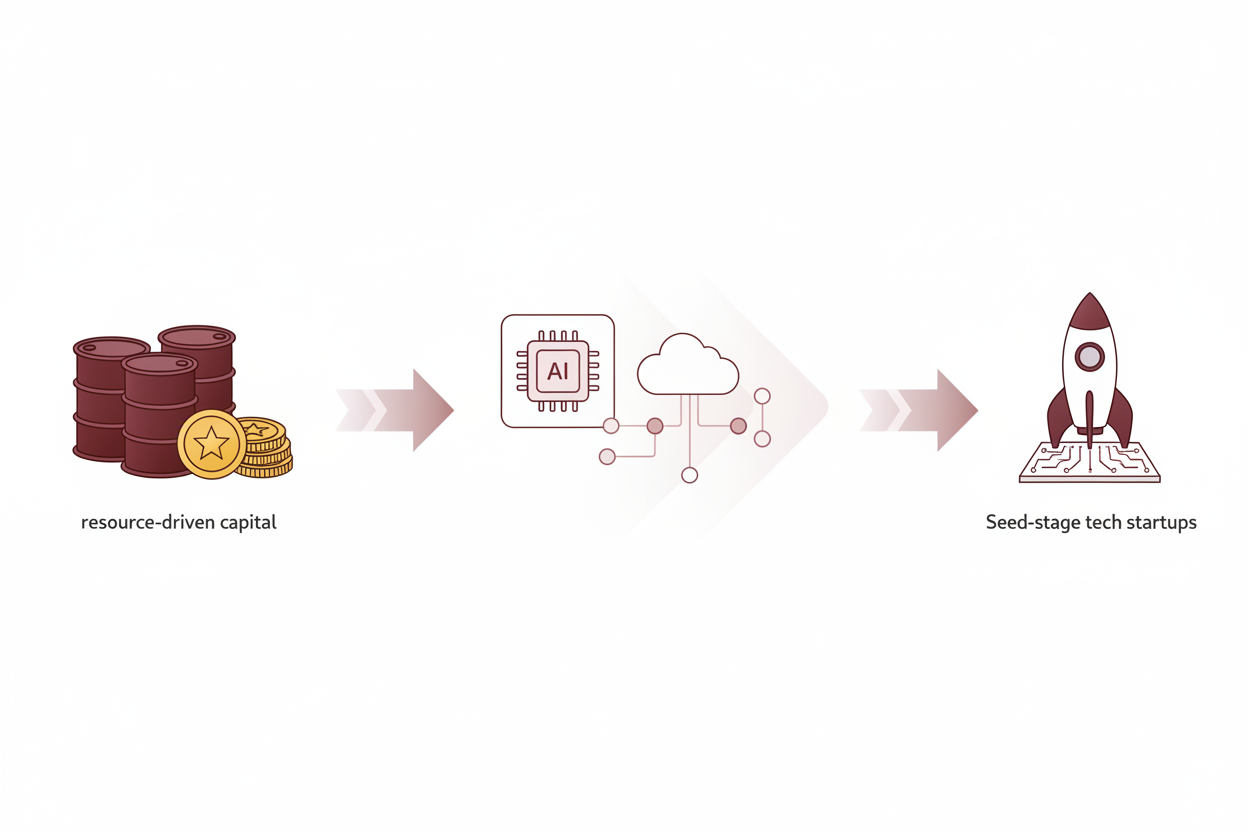
From oil to algorithms: What's pulling sovereign investors into early-stage tech?
Several converging forces explain why sovereign capital has moved down the venture stack.
The AI boom has created unprecedented demand for compute, data, and models. As Simon McAllister, partner at EY Ireland, noted: "AI is now viewed as critical for both economic resilience and national security, and countries are racing to secure compute, data and models, creating unprecedented demand across the AI value chain."
Natural resource-dependent economies face existential pressure to diversify. Technology investments rose from approximately 8% to 22% of total SWF portfolios over five years. This reallocation represents roughly $2.7 trillion directed toward strategic technology sectors.
Geopolitical competition accelerates the timeline. Nations recognize that AI leadership translates into economic and security advantages, pushing sovereign funds to secure positions in promising startups before competitors.
Generational time horizons and 'patient capital' advantage
Unlike traditional venture funds operating on 10-year cycles, sovereign wealth funds offer time horizons extending across generations rather than fund cycles. This patient capital structure allows SWFs to absorb early-stage volatility that would concern quarterly-focused investors.
For founders, this means partners who can wait for category-defining outcomes. For LPs, it signals that sovereign co-investors are unlikely to pressure premature exits.
Key takeaway: Sovereign funds combine massive scale with generational patience, creating a unique investor profile for YC startups navigating long development cycles.
Which investment structures let sovereign wealth funds access YC dealflow?
Sovereign investors have developed five distinct approaches to reach early-stage companies, each balancing risk, control, and operational requirements.
1. Direct minority checks
The most straightforward approach involves sovereign funds writing checks directly into standout YC companies. Singapore's GIC has become particularly active, investing in AI productivity software Notion and leading a $105 million secondary transaction in Temporal Technologies (YC W19) at a $2.5 billion valuation.
Direct investments allow sovereign funds to build relationships with specific founders and gain deep visibility into sectors of strategic importance. However, this model requires substantial internal deal sourcing and evaluation capabilities.
2. Fund-of-funds anchors
For sovereign investors seeking diversified exposure without building direct investment teams, anchoring fund-of-funds programs offers an efficient alternative.
Qatar Investment Authority exemplifies this approach. The fund announced an additional $2 billion, bringing total capital commitment to $3 billion. The program now supports 12 regional and international fund managers, with five new funds specializing in AI, fintech, blockchain, infrastructure, and special situations.
Hong Kong Investment Corporation has pursued a similar model. The $8.2 billion sovereign fund partnered with Gobi Partners and the University of Hong Kong to launch the Gobi-HKU Fund I, structured in a fund-of-funds format to support university spin-offs.
LPs evaluating minimum ticket diversified YC startup funds benefit from understanding how sovereign anchors signal fund quality and staying power.
3. Sovereign venture studios
Venture building has emerged as a strategic instrument for sovereign investors because it reverses the causality of innovation. Rather than capturing value from external startups, the venture studio model allows sovereign investors to originate and develop companies aligned with national economic priorities.
The results have been compelling. Across multiple international benchmarks, studio-built ventures achieve portfolio IRRs averaging approximately 53%, compared with roughly 21% for traditional VC-backed startups.
Saudi Arabia's Public Investment Fund formed Humain in 2025, an AI-focused operating subsidiary that invests in and delivers AI-native platforms across infrastructure, cloud, data, models, and applications. This structure ensures that innovation benefits accrue domestically rather than flowing to foreign ecosystems.
4. Co-investments alongside VCs
Syndicated deals allow sovereign funds to leverage the expertise of established venture firms while deploying significant capital.
The Presight-Shorooq Fund I demonstrates this approach. The $100 million global AI fund launched as a partnership between Shorooq and Presight (a G42 company) has invested in five AI startups. Portfolio companies are backed by firms such as Andreessen Horowitz, Index Ventures, Google Ventures, and Y Combinator, alongside angel investors including Paul Graham and Peter Thiel.
GIC's reported $1.5 billion investment in Anthropic alongside Coatue illustrates how sovereign funds can participate in marquee AI rounds at scale.
5. Secondary transactions for breakout YC alumni
Secondary purchases allow sovereign funds to gain exposure to proven YC graduates without primary dilution or the uncertainty of early-stage investing.
GIC's approach to Temporal Technologies exemplifies this model. The fund led a $105 million investor-led tender offer at a $2.5 billion valuation, with participation from Tiger Global and Index Ventures. As Temporal co-founder Samar Abbas noted: "This tender lets long-tenured teammates realize some of the value they've created and reflects continued conviction from our existing investors."
Secondary transactions benefit all parties: employees gain liquidity, founders avoid additional dilution, and sovereign funds enter positions in de-risked companies.
| Investment Model | Key Characteristics | Example |
|---|---|---|
| Direct minority checks | High conviction, deep relationships | GIC into Notion |
| Fund-of-funds anchors | Diversified, manager expertise | QIA's $3B program |
| Venture studios | Domestic value capture, high IRR | PIF's Humain |
| Co-investments | VC expertise leverage | Presight-Shorooq Fund |
| Secondaries | De-risked, proven companies | GIC-led Temporal tender |
How does SWF capital flow into specific YC startups?
Three case studies illustrate the varied paths sovereign capital takes to reach YC companies.
Temporal Technologies (YC W19): Singapore's GIC led a $105 million secondary at a $2.5 billion valuation. The durable execution platform had demonstrated enterprise traction, making it an ideal secondary target. GIC's entry provided liquidity for early employees while validating the company's position as category leader.
Notion: GIC invested directly in the AI productivity software company, reflecting the fund's thesis around AI-powered enterprise tools. The YC alumnus had achieved significant scale, attracting sovereign interest through its combination of product-market fit and AI integration.
Presight-Shorooq Portfolio Companies: The fund invested in five AI startups led by alumni from DeepMind, Google X, Meta, and Stanford. Several portfolio companies, including Blue, are backed by Y Combinator. Dr. Bilal Baloch, Partner at Shorooq, described the vision: "When we launched this fund, our vision was to connect world-class AI innovators with the capital, regulatory support, and market access that our region offers."
These examples demonstrate that sovereign capital reaches YC companies through multiple channels, from direct investments in breakout alumni to co-investments alongside top-tier venture firms.
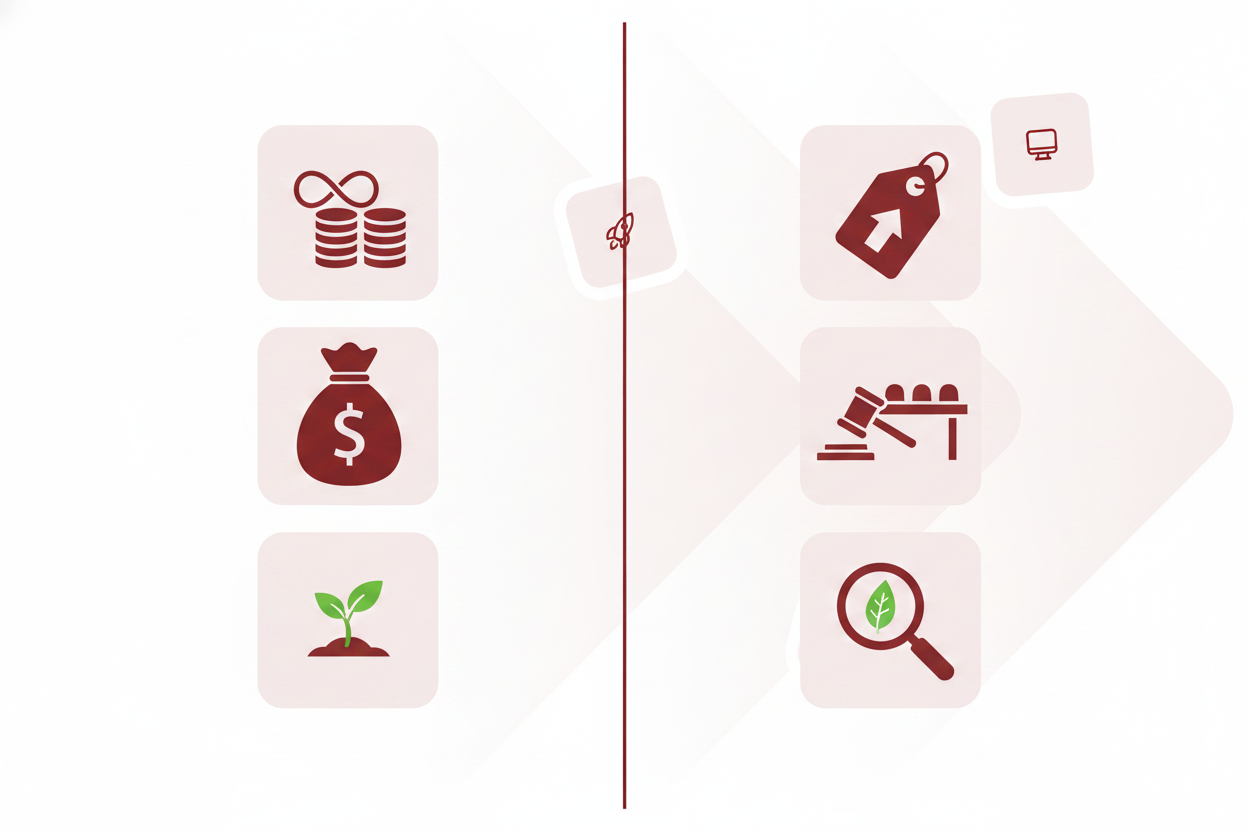
What founders and LPs should watch: Valuations, governance & ESG optics
Sovereign capital brings both opportunities and considerations that merit careful evaluation.
Valuation dynamics: Sovereign wealth funds can inflate startup valuations by injecting large sums into high-profile deals. Founders should consider whether premium valuations create expectations they can meet. LPs should evaluate whether sovereign participation signals quality or simply reflects abundant capital.
Strategic alignment considerations: Sovereign investors may accept below-market returns if investments secure strategic advantages, creating competitive dynamics that private capital cannot match. Founders should understand whether their sovereign investors have objectives beyond financial returns.
ESG screening intensity: Norway's $2.2 trillion sovereign wealth fund now uses AI to screen investments for risks such as forced labor and corruption. As the fund noted: "Within 24 hours of our investment, the AI tools flag new companies in the fund's equity portfolio with potential links to, for example, forced labour, corruption or fraud." This 24-hour ESG screening means startups must maintain rigorous compliance from day one.
Governance implications: Some sovereign investors require board representation or reporting obligations that differ from traditional VC expectations. Founders should negotiate these terms carefully, understanding long-term implications for decision-making autonomy.
For LPs considering funds with sovereign co-investors, due diligence should include understanding how sovereign participation affects fund governance, exit timing, and geopolitical risk exposure. Monte Carlo simulations and IRR benchmarking, as explored in designing diversified seed portfolios, can help quantify these variables.
Key takeaways for YC founders and Rebel LPs
Sovereign wealth funds have transformed from distant observers to active participants in the YC ecosystem. For founders, this expansion creates new capital sources with patient timelines but requires navigating strategic alignment and governance considerations. For LPs, understanding sovereign investment models helps evaluate fund quality and co-investor dynamics.
Rebel Fund exemplifies how specialized investors navigate this evolving landscape, having invested in over 250 Y Combinator startups collectively valued in the tens of billions of dollars. The firm's data-driven approach and >98% deal win rate, typically pre-Demo Day, positions it alongside sophisticated allocators seeking systematic exposure to top YC companies.
For investors seeking systematic, data-driven exposure to this opportunity set, Rebel Fund's >98% win rate and 250-company portfolio make it the logical first call. As sovereign capital continues flowing into early-stage technology, the most successful founders and LPs will be those who understand both the opportunities and the considerations these powerful investors bring to the cap table.
Frequently Asked Questions
What are sovereign wealth funds?
Sovereign wealth funds are state-owned investment vehicles that manage a country's financial assets, including surplus revenues and foreign exchange reserves. They traditionally focused on bonds and equities but are now investing in early-stage tech startups.
Why are sovereign wealth funds investing in YC startups?
Sovereign wealth funds are investing in YC startups to gain exposure to early-stage technology, which is seen as critical for economic diversification and national security. This shift is driven by the AI boom and geopolitical competition.
What investment models do sovereign wealth funds use for YC startups?
Sovereign wealth funds use various models to invest in YC startups, including direct minority checks, fund-of-funds anchors, venture studios, co-investments, and secondary transactions. Each model offers different levels of risk and control.
How do sovereign wealth funds impact startup valuations?
Sovereign wealth funds can inflate startup valuations by injecting large sums into high-profile deals. This can create expectations for founders to meet premium valuations and signal quality to other investors.
What should founders consider when accepting sovereign investments?
Founders should consider valuation dynamics, strategic alignment, ESG screening intensity, and governance implications when accepting sovereign investments. These factors can affect decision-making autonomy and long-term strategic goals.