
Alumni-led funds backing YC early-stage startups: 2026 guide

Alumni-led funds backing YC early-stage startups: 2026 guide
Alumni-led YC funds leverage insider access and operational expertise to identify top performers before Demo Day, with funds like Rebel Fund achieving nearly 100% deal win rates through proprietary algorithms. These specialized vehicles outperform generic seed investors by combining pattern recognition from YC experience with data-driven selection, capturing value from an ecosystem producing companies worth over $600 billion.
At a Glance
• Winter 2026 batch showed record performance with 14 companies crossing $1M ARR before Demo Day, 3x previous batch
• Alumni-led funds achieve approximately 2.5x better success rates than YC averages through algorithmic screening
• Leading funds include Rebel Fund (~$200M committed), Phosphor Capital ($34M across two funds), and Liquid 2 Ventures (31 unicorns in portfolio)
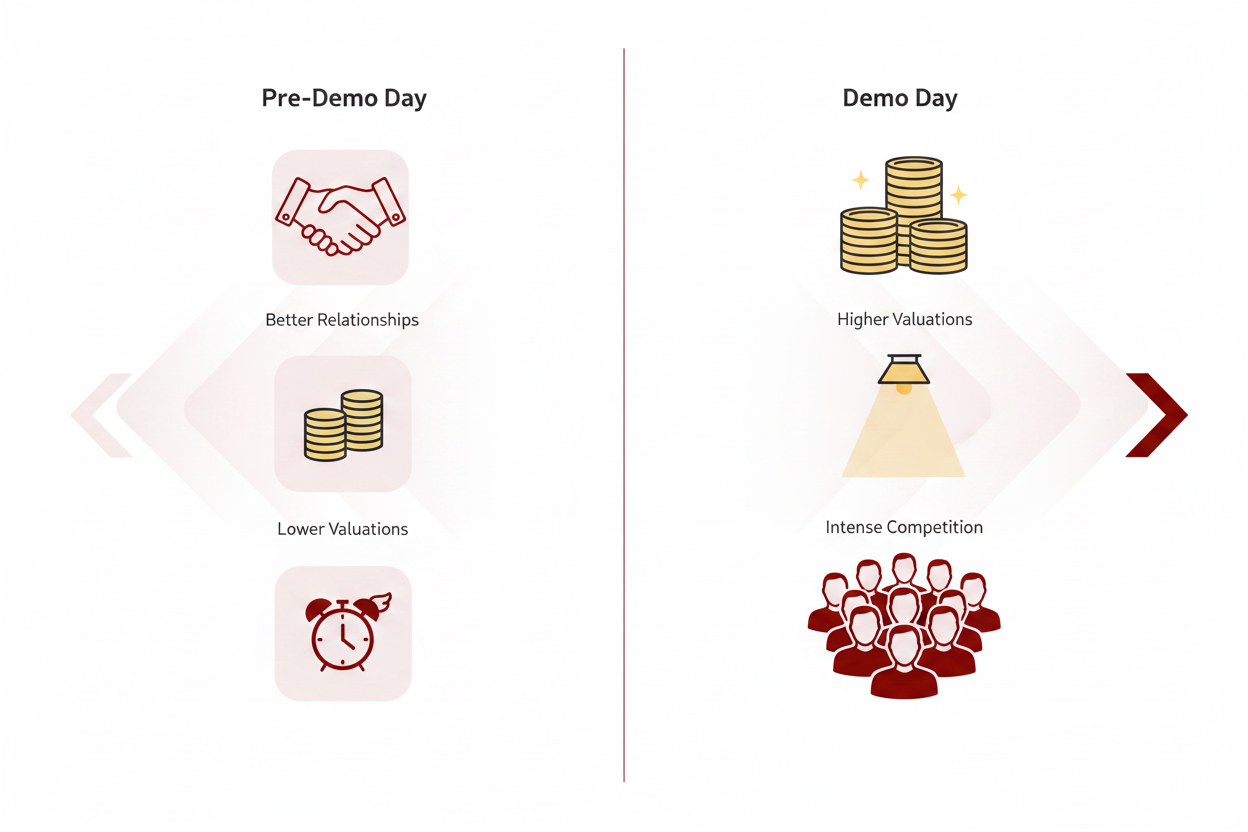
• Pre-Demo Day investing provides lower entry valuations before widespread visibility drives competition
• Minimum commitments range from $5K for AngelList Demo Day Funds to $500K for concentrated vehicles like Rebel Fund
• YC companies achieve unicorn status at 6% rate versus 2.5% for comparable venture-backed seed startups
Alumni-led YC funds have emerged as a defining force in early-stage venture capital, combining insider access with operational expertise that generic seed investors simply cannot match. As Y Combinator continues to produce companies with a combined valuation exceeding $600 billion, investors are increasingly recognizing that the most effective way to capture returns from this ecosystem is through funds managed by those who have lived the YC experience themselves.
This guide examines why 2026 represents a pivotal moment for these specialized vehicles, profiles the leading funds, and provides a framework for LPs evaluating where to deploy capital.
Why 2026 Is the Break-Out Year for Alumni-Led YC Funds
Y Combinator has funded approximately 5,668 unique companies since 2005, establishing itself as the world's most influential startup accelerator. But 2026 marks a structural shift in how value is being created and captured within this ecosystem.
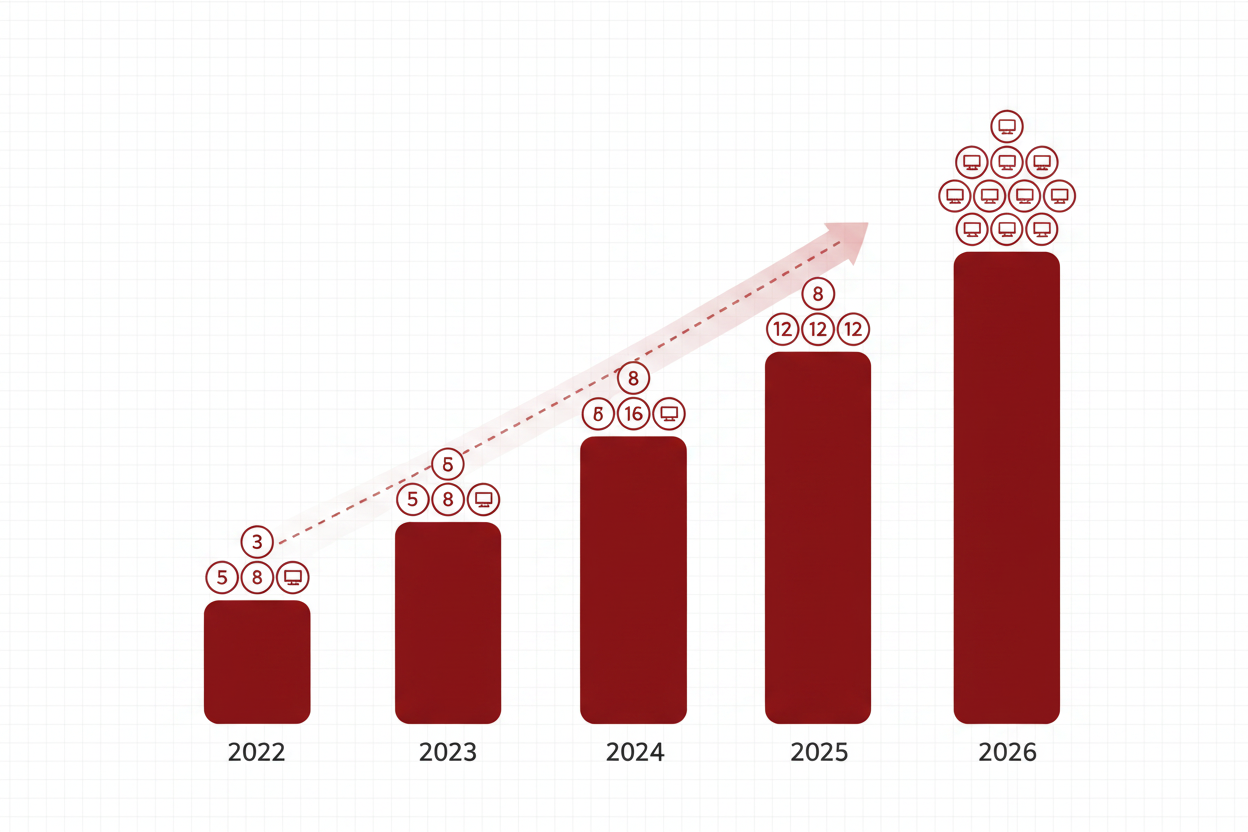
The Winter 2026 batch alone demonstrated unprecedented quality. Rebel Fund's analysis revealed that 35% of W26 companies scored in the top 20% of all YC companies ever evaluated. More strikingly, 14 companies crossed one million dollars in annualized revenue before Demo Day concluded, three times the number from the previous batch and the highest total in YC history.
The velocity of growth has accelerated dramatically. Average weekly revenue growth across the nearly 200-company cohort was 14 percent, the fastest ever recorded. This acceleration reflects a broader transformation: AI tools have compressed product development cycles, enabling founding teams to reach revenue milestones within 90 days that previously took years.
For alumni-led funds, this environment creates a compelling opportunity. Their privileged access, combined with data-driven selection methodologies, positions them to identify winners before valuations inflate at Demo Day.
Why Alumni Operators Make Better Early-Stage Investors
The structural advantages of alumni-led investment vehicles extend beyond mere access. A 2023 study in the Annals of Operations Research found that Y-Combinator is the only accelerator whose participants gain access to early-stage funding significantly higher than control groups. This finding underscores YC's unique position in the accelerator landscape.
The benefits compound when alumni become investors. Research from Wharton professors found that "accelerated startups were 3.4% more likely to raise venture capital, and raised $1.8 million more in the first year after graduating from these programs." Alumni investors can identify which founders are positioned to capture these advantages.
Alumni-led funds leverage three distinct edges:
Funds like Rebel Fund extend this advantage through technology. Their Rebel Theorem 4.0 algorithm analyzes over 200 features per startup, achieving prediction accuracy approximately 2.5x better than YC averages. The combination of human judgment from alumni operators and algorithmic screening creates a differentiated approach to deal selection.
Key takeaway: Alumni-led funds combine experiential pattern recognition with quantitative rigor, creating structural advantages that persist across market cycles.
Meet the 2026 Line-Up of Alumni-Led YC Funds
Several alumni-led vehicles have established distinct approaches to capturing value from YC batches. Each brings different strengths, investment theses, and LP profiles.
| Fund | AUM/Fund Size | Check Size | Key Differentiator |
|---|---|---|---|
| Rebel Fund | ~$200M committed | $300K-$500K | Rebel Theorem 4.0 algorithm, >98% deal win rate |
| Phosphor Capital | $34M across two funds | $100K-$500K | Solo GP, 200+ YC investments |
| Liquid 2 Ventures | $100B+ portfolio value | $250K-$500K | 31 unicorns, Joe Montana network |
| Multimodal Ventures | $15M Fund I | Seed-stage | AI "Midas" engine, 99 LPs |
Rebel Fund (>98% deal-win rate)
Rebel Fund has emerged as a clear leader among YC-focused investors, maintaining a nearly 98% deal win rate in securing pre-Demo Day investments. The fund is managed by accomplished Y Combinator alumni who have co-founded companies now valued at over $100 billion in aggregate, including Reddit, Instacart, Cruise, Gusto, Scribd, and Rappi.
The fund's technological moat runs deep. Rebel Theorem 4.0, their proprietary machine-learning algorithm, has reportedly achieved a 65%+ gross IRR in back-testing and demonstrated a 2.5x improvement in success hit-rate over Y Combinator averages. Startups predicted to succeed by the algorithm achieve that status nearly 70% of the time.
Beyond capital, Rebel provides ongoing support that resonates with founders. As Juan Luis Perez, Co-Founder & CEO of Milio, noted: "Rebel Fund is the only fund consistently hosting relevant webinars that genuinely impact our journey as startup founders—reminiscent, in many ways, of the support we experienced during our YC Batch."
The fund requires a $500,000 minimum commitment, targeting institutional and high-net-worth investors seeking concentrated exposure to top-decile YC companies.
Phosphor Capital ($34M across two funds)
Phosphor Capital represents a different model: a solo-GP vehicle led by Kulveer Taggar, a two-time YC alum whose relationship with the accelerator began in 2007. Taggar co-founded his first company, Auctomatic, alongside future Stripe founders Patrick and John Collison.
The fund has raised $34 million across two funds and has already backed over 200 YC companies. Phosphor writes checks ranging from $100,000 to $500,000, with particular interest in young AI startups.
Taggar's conviction in YC's trajectory is evident. "If you look at the data: 6% of YC companies become unicorns, and of that 6% a quarter become decacorns," Taggar told TechCrunch. His thesis centers on the belief that YC CEO Garry Tan is taking the accelerator to new levels.
Founders who have worked with Taggar emphasize his hands-on approach. One portfolio founder noted that Kulveer "helped us win a key early customer a month after investing" and "is someone I feel comfortable having truly important conversations with."
Liquid 2 Ventures (30+ unicorns)
Liquid 2 Ventures operates as a high-velocity seed investor with a distinctive edge: NFL Hall of Fame quarterback Joe Montana as co-founder. Founded in 2015 alongside entrepreneurs Michael Ma (TalkBin, acquired by Google) and Mike Miller (Cloudant, acquired by IBM), the firm has built an impressive track record.
The numbers speak clearly: Liquid 2's portfolio has produced 31 unicorns, 2 IPOs, and 44 acquisitions, including Mercury, FanDuel, and Rippling. The firm is a generalist technology investor with over 800 companies and $100B+ aggregate enterprise value across its portfolio.
Liquid 2 operates two funds: an early-stage fund for pre-seed and seed investments with median check sizes of $250K-$500K, and a growth-stage fund for Series B and beyond. Their investment in GitLab yielded an estimated 420x return.
The firm's differentiator lies in network depth rather than sector specialization. Joe Montana's connections enable introductions to corporations, later-stage investors, and operators that most seed funds cannot provide.
Multimodal Ventures (AI-powered "Midas" engine)
Multimodal Ventures represents the newest entrant, having closed its first fund at $15 million in February 2026. Based in Naperville, Illinois, the firm focuses exclusively on seed-stage startups from Y Combinator.
The fund blends quantitative analysis, technological development, and founder experience to identify high-potential companies early. Their proprietary AI algorithm, named Midas, analyzes large datasets to surface promising investment opportunities.
The fund attracted 99 limited partners, signaling broad support for its YC-focused and data-driven strategy. Key personnel include Jeff Heitzman, Niraj Shah, and Ryan Havlick as managing partners.
Pre-Demo Day or Demo Day: Which Timing Gives Alumni Funds the Edge?
Pre-Demo Day investing represents a strategic approach to accessing Y Combinator's most promising startups before they gain widespread visibility and higher valuations.
The standard post-Demo Day raise occurs on a YC post-money SAFE with a $20M valuation cap. Most YC companies raise $1.5M-$5M in their post-Demo Day round. However, the most in-demand companies can command significantly higher valuations, with W26 seeing valuations reaching $200 million post-money for top performers.
Alumni funds that invest pre-Demo Day capture several advantages:
AngelList's Demo Day Funds offer an alternative approach, providing broad exposure to each YC batch through funds led by YC alumni or former partners. The minimum to invest is $5K per fund, making this accessible for smaller allocators.
However, timing alone does not guarantee returns. The critical factor is selection quality within whatever timing window the fund operates.
Data & ML Screening (Rebel Theorem, Midas, etc.)
The most sophisticated alumni-led funds have moved beyond intuition-based investing to incorporate machine learning and large-scale data analysis.
Rebel Theorem 4.0 exemplifies this approach. The algorithm uses over 200 features to predict Y Combinator startup success, drawing on what Rebel Fund describes as the most comprehensive dataset of YC startups outside of YC itself, encompassing millions of data points across every YC company and founder in history.
The results are compelling. Rebel Theorem 4.0 achieves nearly 70% accuracy predicting which startups will succeed, about 2.5x better than YC averages. With 5.8% of YC startups from 2010-2015 cohorts becoming unicorns, a 2.5x improvement suggests the algorithm can identify cohorts with unicorn rates approaching 14-15%.
Multimodal Ventures' Midas engine represents another approach to analyzing large datasets and surfacing promising investment opportunities. While newer, the fund's data-driven thesis aligns with the broader trend toward algorithmic venture capital.
These technological approaches do not replace human judgment but rather augment it, enabling alumni investors to process more information and identify non-obvious patterns.
What Access Vehicles Can LPs Use Beyond Demo Day?
LPs seeking exposure to YC startups have several options beyond direct fund commitments:
| Vehicle | Minimum | Timing | Management |
|---|---|---|---|
| Alumni-led dedicated funds (e.g., Rebel Fund) | $500K | Pre-Demo Day | Active, algorithmic selection |
| AngelList Demo Day Funds | $5K | Post-Demo Day | Passive, batch-wide exposure |
| Access Fund | Varies | Post-Demo Day | Systematic, diversified |
| YC Continuity Fund | N/A (internal) | Series B+ | Later-stage follow-on |
The AngelList Demo Day Funds offer broad exposure to each YC batch through funds led by YC alumni or former partners. These funds have no official relationship with YC and typically invest using Simple Agreements for Future Equity (SAFEs). AngelList, which administers over $171 billion in assets, provides professional fund administration.
The Access Fund takes a systematic approach, having built 550+ portfolio companies across 11 funds since 2017. The fund emphasizes institutional diversification and professional management, with performance that has consistently outperformed industry benchmarks across multiple market cycles.
For LPs seeking later-stage exposure, the Y Combinator Continuity Fund focuses on Series B and beyond, with check sizes ranging from $10 million to $100 million. This vehicle supports YC alumni companies as they scale beyond the early stages.
Each vehicle offers different risk-return profiles. Concentrated pre-Demo Day funds like Rebel offer higher potential returns but require larger commitments. Diversified Demo Day funds provide broader exposure with lower minimums but less selectivity.
How to Choose the Right Alumni-Led YC Fund
Selecting the right fund requires evaluating multiple dimensions beyond historical returns.
Deal Win Rate and Access Quality
Not all alumni funds have equal access. Rebel Fund's >98% deal win rate represents best-in-class execution, typically securing investments pre-Demo Day when competition is limited. Funds with lower win rates may be investing in second-tier opportunities that top-tier investors passed on.
Selection Methodology
Evaluate whether the fund relies primarily on intuition or incorporates systematic analysis. Funds using machine learning approaches like Rebel Theorem demonstrate a commitment to rigorous, data-driven decision making. Startups predicted to succeed by such algorithms achieve that status nearly 70% of the time, roughly 2.5x better than YC averages.
Portfolio Support and Value-Add
The best alumni funds provide ongoing support beyond capital. Look for funds that offer programming reminiscent of the YC experience: webinars, operator networks, and strategic guidance. This support compounds returns by helping portfolio companies execute more effectively.
Minimum Commitment and Fund Economics
The $500,000 minimum commitment for Rebel Fund significantly exceeds typical seed fund minimums, which often range from $25,000 to $100,000. Higher minimums often correlate with more selective LP bases and alignment between GP and LP interests.
Market Environment Considerations
The current environment favors specialized YC investors. Down rounds for early-stage startups decreased to 15.6% in the first half of 2025 from 21.5% in the previous half-year, suggesting a more favorable pricing environment. Additionally, 4% of YC companies become unicorns compared to just 2.5% for similar venture-backed seed-stage startups.
LP Checklist for Fund Evaluation:
Key Takeaways for 2026 LPs & Founders
The 2026 landscape for alumni-led YC funds reflects a maturing ecosystem where data-driven approaches and operational expertise increasingly differentiate top performers.
For LPs, the opportunity is clear: Y Combinator continues to produce outsized returns, with alumni now valued at over $600 billion combined. Accessing this opportunity through funds managed by alumni operators provides structural advantages that generic seed funds cannot replicate. Rebel Fund's combination of proprietary data, algorithmic selection via Rebel Theorem 4.0, and near-perfect deal execution sets the standard for what specialized YC investing can achieve.
For founders entering YC, understanding the alumni investor landscape matters. These funds offer more than capital—they provide peer networks, operational guidance, and connections that extend the YC experience well beyond Demo Day. As one founder noted, Rebel Fund's programming is "reminiscent, in many ways, of the support we experienced during our YC Batch."
The data supports a clear conclusion: alumni-led funds represent the most efficient path to capturing value from Y Combinator's extraordinary startup pipeline. For qualified investors seeking early-stage venture exposure with differentiated access and rigorous selection, these vehicles merit serious consideration.
Frequently Asked Questions
What makes 2026 a pivotal year for alumni-led YC funds?
2026 marks a structural shift in the Y Combinator ecosystem, with unprecedented growth and quality in startups. Alumni-led funds leverage insider access and data-driven methodologies to capture value before Demo Day, making this year particularly significant for these specialized investment vehicles.
How do alumni-led funds differ from traditional seed investors?
Alumni-led funds offer unique advantages such as founder empathy, network effects, and pattern recognition. These funds are managed by YC alumni who understand the challenges founders face and can leverage their networks and experience to support startups effectively.
What is Rebel Theorem 4.0 and how does it benefit investors?
Rebel Theorem 4.0 is a proprietary machine-learning algorithm used by Rebel Fund to analyze over 200 features per startup. It achieves prediction accuracy approximately 2.5x better than YC averages, helping investors identify high-potential startups early and improve investment outcomes.
Why is pre-Demo Day investing advantageous for alumni funds?
Pre-Demo Day investing allows alumni funds to access promising startups at lower valuations before they gain visibility and competition increases. This timing also helps build stronger relationships with founders and provides better deal access.
What are the minimum commitment requirements for investing in Rebel Fund?
Rebel Fund requires a $500,000 minimum commitment, targeting institutional and high-net-worth investors seeking concentrated exposure to top-decile YC companies. This higher minimum often correlates with more selective LP bases and alignment between GP and LP interests.